Edge AI or Centralized Servers for Real-Time Decisions
Where Should Real-Time Decisions Happen?
When a system needs to act on data in milliseconds, the location of that decision matters. The question is whether to run inference locally on an edge device or send data to a central server. Both approaches have their place, and the right choice depends on latency, reliability, bandwidth, and the nature of the task at hand.
Edge AI solutions process data on the device itself, often using specialized hardware that can handle neural network inference without a network connection. Centralized servers, by contrast, aggregate data from many endpoints and return a result after processing. The trade-offs are not always obvious, and many systems end up using a hybrid of the two.
When Latency Is the Deciding Factor
For applications where a delay of even a few hundred milliseconds is unacceptable, edge computing is the natural choice. Consider an autonomous vehicle that must detect a pedestrian and apply brakes. Sending camera frames to a remote server and waiting for a response would add unpredictable delays. The vehicle needs to make that decision locally, on a dedicated processor that runs real-time inference.
The same logic applies to industrial robots, drones, and medical devices that monitor vital signs. In these cases, the cost of a round trip to a server is too high. Edge AI solutions allow the system to act on sensor data instantly, without relying on network availability.
When Context and Scale Matter More
Centralized servers shine when decisions benefit from a broader view. For example, a fleet of delivery robots might each make local obstacle avoidance decisions, but route optimization across the entire fleet is better handled on a central server that sees traffic patterns and order queues. Similarly, a factory with hundreds of machines might use local edge processors for safety cutoffs but send vibration and temperature data to a central system for predictive maintenance across the whole facility.

Centralized processing also makes updates and model retraining simpler. A single server can host a large model and push updates to edge devices as needed. For applications where the decision logic changes frequently, a central server reduces the complexity of updating every endpoint individually.
Bandwidth is another factor. If each sensor produces high-resolution video or audio, sending all that data to a server can saturate a network. Edge AI solutions can preprocess the data locally, sending only relevant events or summaries upstream. This reduces cost and power consumption in the network infrastructure.
Power Budget and Thermal Constraints
Edge devices often operate under strict power budgets. A camera on a remote tower, a wearable medical monitor, or an embedded system in a vehicle may have limited battery capacity and no active cooling. Running a large neural network on such a device can drain the battery quickly and generate heat that needs to be managed.
Centralized servers, meanwhile, have ample power and sophisticated thermal management. They can run larger models with higher accuracy, but they introduce the latency and reliability issues already mentioned. The choice often comes down to how much accuracy can be sacrificed for speed and autonomy.
Modern adaptive computing solutions address this tension by allowing the same software to run across edge and cloud. A model can be trained on a powerful server and then optimized to run efficiently on a smaller edge processor. The system can decide at runtime whether to infer locally or send data to the server, depending on current network conditions and task urgency.
Reliability and Functional Safety
For safety-critical systems, local processing is often a regulatory requirement. Functional safety standards for industrial machinery or medical equipment demand that a failure in communication does not lead to harm. The edge device must be able to operate independently, with its own safety logic, even if the network is down.
Centralized servers can complement this by providing secondary verification or logging, but the primary decision path must be local. This is common in autonomous driving and industrial automation, where edge inference handles real-time control while a central server performs higher-level planning.
In less critical applications, such as smart building management or retail analytics, a temporary loss of connectivity may be acceptable. The system can cache data and send it later, or fall back to a simpler local rule set until the connection returns.
Data Privacy and Compliance
Regulations such as GDPR or HIPAA may restrict where data can be processed. Sending sensitive data to a central server can create legal exposure, especially if the server is in a different jurisdiction. Edge AI solutions can process personal data locally, sending only anonymized summaries or aggregated insights to the server.
This is particularly valuable in healthcare, finance, and surveillance applications. For instance, a camera system in a hospital can detect a person falling without ever transmitting video footage. The edge device runs the inference, triggers an alert, and the raw data never leaves the device.
Centralized servers, on the other hand, can be easier to audit and secure if they are in a controlled data center. But the data must travel over a network, which introduces additional attack surfaces. Many organizations choose to encrypt data end to end and use edge computing to minimize the amount of sensitive data in transit.
Hybrid Approaches Are Becoming Common
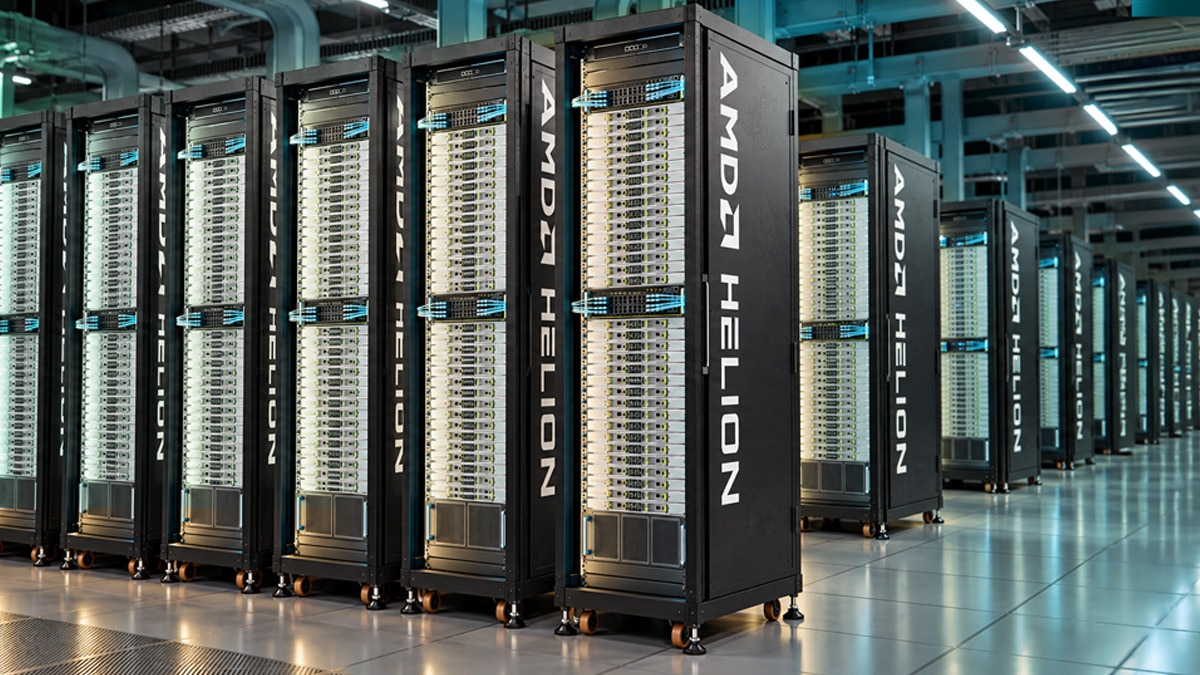
Rather than choosing one or the other, many architects design systems that use both. An edge device can handle time-critical decisions locally while sending less urgent data to a central server for analysis and model improvement. The server can then push updated model weights back to the edge, improving accuracy over time.
Adaptive computing solutions make this hybrid model practical by providing a unified development environment. A developer can write code that runs on both the edge and the server, with the system choosing the optimal execution path based on current conditions. This flexibility reduces the need to maintain two separate codebases.
For example, a smart traffic system might use edge processors at each intersection to manage traffic lights in real time, while a central server aggregates data from many intersections to optimize flow across the city. The edge units operate independently if the central server is unreachable, but they benefit from the server's broader view when it is available.
Making the Choice
Start by identifying the latency requirement. If the decision must happen within a few milliseconds, edge computing is the only viable path. Next, consider the power and thermal constraints of the deployment environment. If the device has limited resources, a centralized server or a hybrid may be better.
Evaluate the cost of network connectivity. If bandwidth is expensive or unreliable, local preprocessing reduces the load. Finally, review regulatory and safety requirements. If data must remain on the device, or if the system must function without a network, edge AI solutions are necessary.
In many cases, the answer is not one or the other but a balanced combination that places fast, local decisions at the edge and broader, slower optimization in the cloud. The technology to support this split is mature, and the tools to manage it are increasingly accessible.